
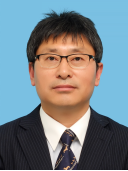
Kokyo Oh/ Center for Environmental Science in Saitama, Japan
Prof. Dr. Kokyo Oh is a senior researcher in Center for Environmental Science in Saitama, Japan. He obtained Ph.D. degree (soil science) in 1995, and was honored as a research fellow by Japan Science and Technology Agency (STA) from 1997 to 1999. His research areas include soil science, environmental conservation, environmental chemistry and biology, and environmental agronomy. He has published more than 200 major academic papers, has presided over and participated in more than 100 scientific research fund projects, and has been invited to be the chairman of more than 20 international conferences.
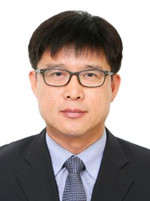
Prof. Jinkeun Kim/ Jeju National University, Jeju, Korea
Jinkeun Kim is a Professor in the Department of Environmental Engineering at Jeju National University, Korea, where he has served since 2011 . He received his B.S. in Environmental Engineering from the University of Seoul in 1991, followed by an M.S. in Environmental Health Sciences from Seoul National University in 1994 . Before pursuing his doctoral studies, he worked as an engineer at Korea Water Resources Corporation (K-water) for ten years . He earned his Ph.D. in Environmental Engineering from the University of Texas at Austin in 2004 . Dr. Kim’s research focuses on water and wastewater treatment processes, water quality management, and groundwater management . His recent work addresses climate crisis adaptation for water supply systems in Jeju Province and the impact of pollutants on groundwater . He has served as a conference chair and contributed to academic publications on environmental sustainability .
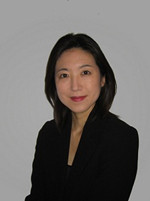
Prof. Miwako Hosoda/ Seisa University, Tokyo, Japan
Dr. Miwako Hosoda, Professor of Seisa
University, Project Researcher of University of Tokyo Institute
of Medical Science, has been conducting her sociological
research though observing human relations in the healthcare
field. Using knowledge from her prior research on patient
advocacy, healthcare policy, and public participation in
medicine, she has been making collaborative efforts with local
residents with illnesses and disabilities she had engaged.
Together, they are continuing to seek out ways to help the
recovery in their communities.
Dr. Hosoda graduated from the Department of Sociology at the
University of Tokyo in 1992, and received an MA and PhD in
Sociology from the University of Tokyo. After working as a
research fellow at the Japan Society for the Promotion of
Science(JSPS), she studied at Columbia University Mailman School
of Public Health as associate, and Harvard T.H. Chan School of
Public Health as research fellow. Upon returning to Japan, she
joined the Seisa University in 2012 and served as vice president
from 2013 to 2020.
Dr. Hosoda was elected as president of ISA (International
Sociological Association), Research Committee of Sociology of
Health (2018-2023), and APSA (Asia Pacific Sociological
Association (2017-2020). She is currently Vice President of
APSA, Representative Director of the Japanese Society for Brain
Injury Caring Communities, Representative Director of IAFA
(Inclusive Action For All).
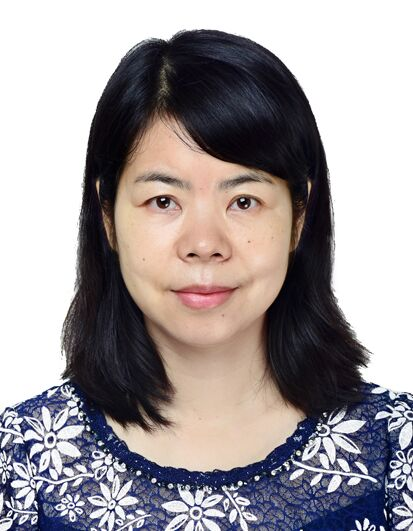
Prof. Yi Huang/ Chengdu University of Technology, China
Yi Huang, female, professor, doctoral
supervisor at Chengdu University of Technology (CDUT). She is
the academic and technical leader in Sichuan Province, China.
She is the deputy director of the Key Laboratory of Synergistic
Control and Joint Remediation of Soil and Water Pollution of
National Environmental Protection, the member of Chinese Society
of Mineralogical and Petrographic Geochemistry, the director of
the Soil Fertilizer Society of Sichuan, and the member of the
European Geological Union (EGU) and the American Chemical
Society (ACS).
Prof. Huang is mainly engaged in the research of environmental
geochemistry and ecological restoration of mining area. In the
past ten years, she has presided more than 15 research projects.
She has established a new isotope tracer method to
quantitatively identify the source of heavy metals, revealed the
migration and transportation pathways and the laws of heavy
metals in the ecological chain, and created a triple barrier
technology to prevent and control the migration of heavy metals
in multiple environmental media. She has published more than 110
academic papers, 3 monographs, and authorized 12 invention
patents. She was awarded the second prize of National
Environmental Protection Science and Technology, and the second
prize of Sichuan Provincial Scientific and Technological
Progress.